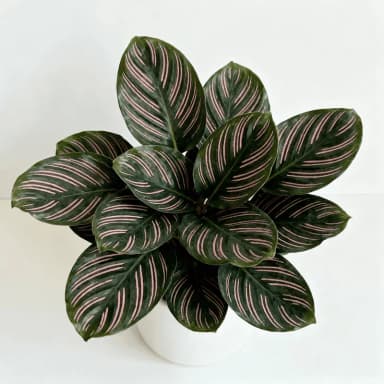
Calathea Care Guide
Calathea / Goeppertia spp.
advanced careCalathea (Calathea / Goeppertia spp.) is one of the fussier common houseplants: it wants soil that is always moist but never wet, high humidity, and water free of the minerals and chlorine found in most tap water.
Quick care facts
- Watering
- Every 5–7 days; keep soil evenly moist at all times, never soggy or dry
- Light
- Medium, indirect light; direct sun scorches and fades the leaf patterns
- Humidity
- 60%+; use a humidifier or pebble tray in most homes
- Temperature
- 18–24°C (65–75°F); avoid cold drafts and sudden swings
- Soil
- Light, peat-based mix with perlite for moisture retention and drainage
How to water a Calathea
Calathea needs soil that never fully dries out but also never sits wet — check every few days and water as soon as the top 2 centimetres of soil starts to feel just barely dry, which usually means every 5 to 7 days year-round. Unlike drought-tolerant plants, letting a calathea's soil dry out completely causes crispy, curling leaves within days.
Use filtered, distilled, or rain water rather than straight tap water whenever possible — calathea is notably sensitive to the chlorine, fluoride, and mineral salts common in tap water, which show up as brown leaf-tip burn even when watering frequency is correct. If tap water is your only option, let it sit uncovered overnight so some chlorine can dissipate.
Water until it drains from the pot's holes, then discard any standing runoff so the roots are moist, not submerged. Pair consistent watering with humidity of 60% or higher — a pebble tray or humidifier nearby — since low humidity stresses calathea as fast as inconsistent watering does, and the two problems often show up looking identical.
Watering a Calathea with LeafyPod
Calathea's narrow moisture window — always damp, never dry, never waterlogged — is exactly what LeafyPod's soil-aware profile is built for: it schedules frequent, smaller top-down waterings rather than the deep-soak-then-dry-out rhythm used for hardier species, keeping the root zone consistently moist without saturating it.
The app's reservoir can be filled with filtered water, sidestepping the tap-water mineral buildup that causes leaf-tip burn on this species, and its humidity-aware notifications help you catch the dry-air stress that calathea owners most often mistake for a watering problem.

LeafyPod Starter Pack
From $145
Common Calathea problems
Signs of overwatering
- Soft, mushy stems near the soil line
- Yellowing leaves with a translucent, water-soaked look
- Soil that stays waterlogged and heavy for days
- Root rot smell or fungus gnats around the pot
Signs of underwatering
- Leaves curling tightly and edges crisping brown
- Leaves drooping and losing their glossy patterning
- Soil pulling away from the pot and drying hard
- Brown, crunchy tips even with regular watering (often a humidity or mineral issue)
Frequently asked questions
Why does my calathea have brown, crispy leaf edges?
This is most often tap-water minerals or low humidity, not underwatering. Switch to filtered, distilled, or rested tap water and raise humidity above 60% before assuming you need to water more often.
How often should I water a calathea?
About every 5 to 7 days year-round, watering as soon as the top couple of centimetres of soil feel just barely dry. Calathea should never be allowed to dry out completely the way drought-tolerant plants can.
Can I use tap water on my calathea?
You can, but calathea is notably sensitive to the chlorine and mineral salts in tap water, which often cause leaf-tip burn. Filtered, distilled, or rain water — or tap water left out overnight — is safer for this species.
Does calathea really need high humidity?
Yes — calathea is one of the houseplants most sensitive to dry air, and humidity below about 50% often causes curling and crisping that looks like a watering problem. Aim for 60% or higher with a humidifier or pebble tray.