Snake Plant Care Guide
Dracaena trifasciata
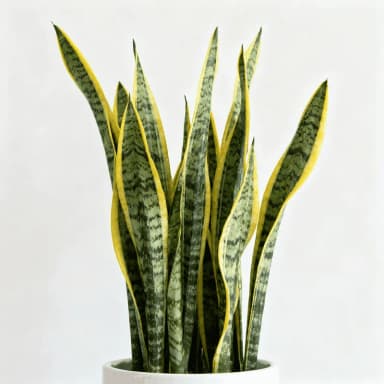
easy careSnake plant (Dracaena trifasciata) stores water in its thick, upright leaves and tolerates weeks of drought, but its shallow rhizome and root system turn rot-prone the moment soil stays wet for too long.
Quick care facts
- Watering
- Every 2–8 weeks; more often in summer, as little as every 6–8 weeks in winter
- Light
- Low to bright indirect light; tolerates deep shade and stronger sun
- Humidity
- 30–50%; unbothered by dry indoor air
- Temperature
- 15–27°C (60–80°F); avoid below 10°C (50°F)
- Soil
- Fast-draining cactus or succulent mix
How to water a Snake Plant
Snake plants are succulent-adjacent: their leaves hold enough water to go 2 to 6 weeks between waterings, with the shorter end of that range in a bright, warm summer and the longer end through a cool, low-light winter. Always confirm the soil is completely dry, not just at the surface, before adding more.
Water thoroughly until it runs from the drainage holes, then let the pot dry out fully again — snake plants are far more likely to die from a pot that never dries out than from a long gap between waterings. A moisture meter or a wooden skewer left in the soil for a minute is more reliable than a finger poke, since the lower half of the pot often stays damp after the surface looks dry.
Cut watering back hard in winter, sometimes to once every 6 to 8 weeks in cooler, darker rooms. The rhizome and roots sit close to the surface and rot quickly in cold, wet soil, which is the most common cause of collapsed, mushy leaves.
Watering a Snake Plant with LeafyPod
Snake plant's wide 2-to-6-week watering window is exactly what LeafyPod's seasonal profile is built to track: it lengthens the interval automatically as light and temperature drop, rather than defaulting to a flat weekly schedule that would keep the rhizome damp far too often.
Top-down watering paired with reservoir sensing also means the plant is only watered when the profile and a real dry-soil check both agree it's due, which protects the rot-prone rhizome better than a bottom-reservoir pot that keeps the base perpetually wet.

LeafyPod Starter Pack
From $145
Common Snake Plant problems
Signs of overwatering
- Leaves turning yellow and mushy at the base
- A soft, collapsing rhizome with a sour smell
- Brown, water-soaked spots spreading up the leaf
- Leaves toppling over despite looking otherwise healthy
Signs of underwatering
- Leaves wrinkling, curling, or puckering along their length
- Slow growth with no new shoots for months
- Leaf tips turning dry and brown
Frequently asked questions
How often should I water a snake plant in winter?
Roughly every 6 to 8 weeks, or whenever the soil is completely dry through the pot, since cooler temperatures and low light slow growth to a near-stop. Watering on a normal warm-season schedule through winter is the top cause of rot.
Why is my snake plant leaf mushy and falling over?
A soft, collapsing leaf or a sour smell near the base signals rhizome rot from soil that stayed wet too long. Remove affected leaves, let the remaining soil dry out completely, and repot into fresh, fast-draining mix if the smell persists.
How long can a snake plant go without water?
Comfortably 4 to 6 weeks in typical indoor conditions, and longer in cool, low-light winter rooms. It is one of the most drought-tolerant common houseplants.
Does a snake plant need direct sun?
No — it tolerates low light well and also handles bright, indirect, or moderate direct sun. Watering frequency is a bigger care factor for this plant than light intensity.