Begonia Care Guide
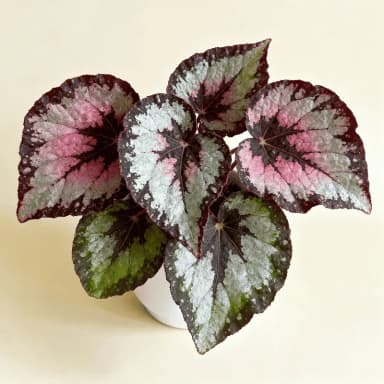
Begonia maculata
moderate careThe silver-spotted leaves of Begonia maculata sit on a plant with an unusually narrow comfort zone: it sulks and drops leaves if the soil ever fully dries out, yet develops root rot just as fast if it's kept soggy, which makes consistency a bigger skill here than either extreme.
Quick care facts
- Watering
- Every 5–7 days, when the top 2–3 cm of soil is dry — never letting it fully dry out
- Light
- Bright, indirect light; avoid direct sun, which scorches the spotted leaves
- Humidity
- 50–60%+; use a pebble tray or humidifier rather than misting
- Temperature
- 18–24°C (65–75°F); avoid drafts and sudden temperature swings
- Soil
- Light, well-draining potting mix with added perlite
How to water a Begonia
Aim for a narrow, consistent moisture band: check every 5 to 7 days and water once the top 2 to 3 cm of soil feel dry, but don't let the pot go bone dry. A begonia that dries out completely will drop leaves and take weeks to recover, even after it's watered again.
Water evenly until it drains from the pot, then let any excess run off right away — the roots are just as unforgiving of standing water as the leaves are of drying out, and root rot from a wet saucer is a common way this plant is lost. A well-draining mix with extra perlite widens your margin for error on both ends.
This species wants real humidity, ideally 50% or higher, but resist the urge to mist it. Water sitting on the fuzzy, textured leaves invites powdery mildew; a pebble tray, humidifier, or grouping with other plants raises ambient moisture without ever wetting the foliage.
Watering a Begonia with LeafyPod
Begonia maculata's problem isn't drought tolerance or rot risk alone — both failure modes sit close together on a short timeline, so LeafyPod runs a tight, frequent top-down cycle that keeps the soil in that narrow moist-but-not-wet band rather than swinging between a deep soak and a long dry stretch.
Because misting this plant to raise humidity risks mildew on its textured leaves, the schedule does the humidity work at the root zone instead of the leaf surface, giving this begonia the consistency it needs without putting water where it can cause a different problem.

LeafyPod Starter Pack
From $145
Common Begonia problems
Signs of overwatering
- Lower leaves yellowing and turning soft or mushy
- A blackened, collapsing stem near the soil line
- White or grayish powdery patches on leaves from trapped moisture
- A sour smell from consistently wet soil
Signs of underwatering
- Leaves drooping and curling at the edges
- Crispy, brown leaf margins
- Leaf drop even after the plant is watered again
- Slowed growth and smaller new leaves
Frequently asked questions
How often should I water a begonia maculata?
Every 5 to 7 days, once the top 2 to 3 cm of soil feel dry, but without letting the pot fully dry out the way you might with a hardier houseplant. Consistency matters more here than a strict schedule.
Should I mist my begonia to raise humidity?
No — misting leaves water sitting on the textured foliage, which invites powdery mildew. Use a pebble tray, humidifier, or group plants together to raise ambient humidity without wetting the leaves directly.
Why are my begonia's leaves dropping?
Leaf drop can mean either extreme: a soil that dried out completely, or roots sitting in water too long. Check the soil moisture first — dry and crumbly points to underwatering, while soggy and heavy points to overwatering.
Why does my begonia have white powdery spots on its leaves?
That's powdery mildew, usually caused by water or excess humidity sitting directly on the foliage. Improve air circulation, avoid misting, and remove badly affected leaves rather than treating the whole plant.