Jade Plant Care Guide
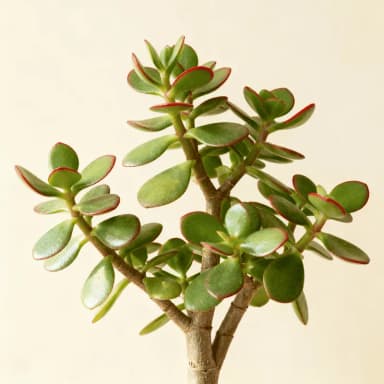
Crassula ovata
easy careDamp soil is the real threat to jade plant (Crassula ovata): its thick, water-storing leaves mean the stems and roots rot easily if the pot never dries out fully, so skipping a fixed schedule in favor of checking dryness matters more than any calendar.
Quick care facts
- Watering
- Every 14–21 days, once the soil has dried out completely; every 3–6 weeks in winter
- Light
- Bright, direct light for several hours a day; leggy growth signals too little light
- Humidity
- Average household humidity (30–40%) is fine
- Temperature
- 15–24°C (59–75°F); avoid drafts and temperatures below 10°C (50°F)
- Soil
- Fast-draining succulent/cactus mix in a pot with drainage holes
How to water a Jade Plant
Water a jade plant only once the soil is completely dry, which usually works out to every 14 to 21 days during spring and summer. Check by pressing a finger deep into the pot or waiting until the lowest leaves feel slightly soft before the next thorough soak — jade's plump leaves are a built-in reservoir, and there is rarely a reason to water on a fixed weekly calendar.
Soak the pot until water runs freely from the drainage holes, then let it drain completely; jade's woody stems and shallow roots rot within days in soil that stays wet. A wide, slightly shallow pot with a fast-draining cactus mix helps the whole root ball dry evenly rather than staying damp at the center.
Water even less in winter — roughly every 3 to 6 weeks — as jade's growth slows to a near-standstill. Leaf drop combined with wet soil in the colder months is almost always overwatering, not a sign the plant needs more water.
Watering a Jade Plant with LeafyPod
Jade plant's woody stems can look sturdy right up until the roots have already rotted, so LeafyPod leans conservative on cadence for this species and lengthens the interval automatically through the cooler months, instead of watering to a fixed schedule that ignores dormancy.
Top-down delivery lets the fast-draining succulent mix dry out completely between cycles, which matters most for a plant whose failure mode is almost always too much water rather than too little — the app is built to under-water a jade plant before it over-waters one.

LeafyPod Starter Pack
From $145
Common Jade Plant problems
Signs of overwatering
- Leaves turning yellow and dropping while feeling soft or swollen
- Wrinkled, mushy stems near the soil line
- Black or brown, foul-smelling roots when checked
- Sudden leaf drop even though the soil is visibly wet
Signs of underwatering
- Leaves wrinkling and puckering as stored water depletes
- Leaves feeling thin and slightly floppy rather than firm
- Lower leaves shriveling and dropping while dry
- Little new growth at the stem tips over a season
Frequently asked questions
How often should I water a jade plant?
Every 14 to 21 days in the growing season, only after the soil has dried out completely, and roughly every 3 to 6 weeks in winter. A jade plant's plump leaves store enough water to make waiting the safer default.
Why is my jade plant dropping leaves?
Leaf drop paired with damp soil almost always means overwatering and early stem or root rot. Let the soil dry out fully, check that the pot drains well, and hold off watering until the leaves start to feel slightly less firm.
Can a jade plant get by on less water than I'm giving it?
Usually yes. Jade plants are far more likely to be killed by overwatering than by underwatering, so when the schedule is in doubt, wait a few extra days rather than watering early.
Does a jade plant need a special pot or soil?
A wide pot with drainage holes and a fast-draining cactus or succulent mix works best. Standard potting soil retains too much moisture around jade's shallow root system and raises the risk of rot.