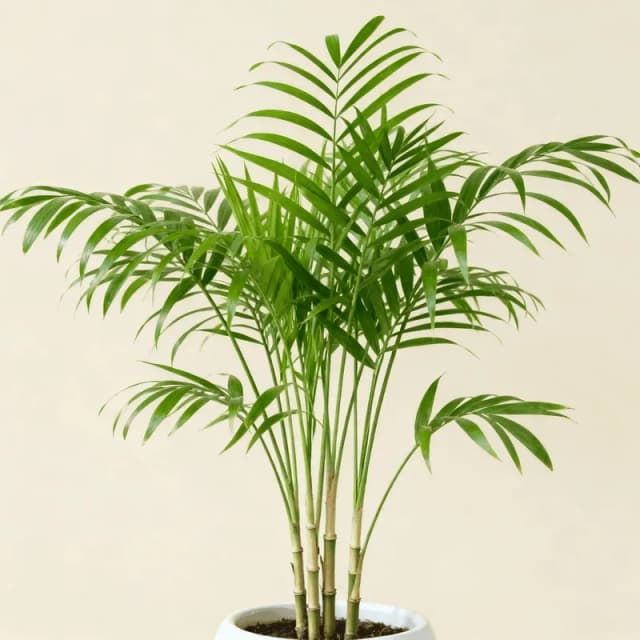
Majesty Palm Care Guide
Ravenea rivularis
advanced careRavenea rivularis grows along riverbanks in the wild and expects that same unforgiving consistency indoors — it needs soil that never fully dries and humidity well above average room air, and the advanced rating is honest: this is a demanding plant that browns quickly the moment either slips.
Quick care facts
- Watering
- Every 5–7 days; keep soil consistently moist and never let it dry out fully
- Light
- Bright, indirect light; tolerates some gentle direct morning sun
- Humidity
- 50–60%+; needs a humidifier or pebble tray in most homes
- Temperature
- 18–24°C (65–75°F); keep away from drafts and dry heating vents
- Soil
- Rich, moisture-retentive potting mix that still drains freely
How to water a Majesty Palm
Majesty palm comes from riverbank habitats and has little tolerance for drying out, so water every 5 to 7 days and check the surface often — if the top of the soil starts to look pale and dry, it's already later than it should be. Keep the mix consistently damp rather than waiting for it to dry between waterings.
Humidity matters just as much as watering for this species; most of the frond browning majesty palm owners fight is caused by dry indoor air, not an imperfect watering schedule. Group it with other plants, run a humidifier nearby, or set it on a pebble tray, especially in heated rooms in winter.
The margin for error is genuinely narrow: water deeply and let it drain so the roots aren't sitting in a full saucer, but don't let the pot go bone dry between sessions either. This plant is rated advanced not because the technique is complicated, but because it demands rigid consistency that's easy to miss in a normal routine.
Watering a Majesty Palm with LeafyPod
Consistency is precisely what majesty palm needs and what manual watering struggles to deliver — LeafyPod's scheduled top-down cycle keeps the soil reliably damp on this species' tight 5-to-7-day rhythm, removing the missed or delayed watering that's usually the first domino in a browning majesty palm.
It's worth being upfront that the reservoir alone doesn't solve this palm's other demand: humidity. LeafyPod handles the soil-moisture half of the equation reliably, but a majesty palm in dry indoor air still needs a humidifier or pebble tray alongside it to stay fully healthy.

LeafyPod Starter Pack
From $145
Common Majesty Palm problems
Signs of overwatering
- Yellowing fronds paired with a sour smell from consistently soggy, poorly-drained soil
- Soft, blackened tissue at the base of the stems
- Fungus gnats or algae on the soil surface
Signs of underwatering
- Brown, crispy frond tips and edges spreading quickly across the plant
- Whole fronds browning and dying back within days of the soil drying out
- Fronds drooping and losing their arching shape
Frequently asked questions
Why is majesty palm so hard to keep alive indoors?
It comes from consistently wet, humid riverbank habitats and has little tolerance for dry soil or dry air. Indoors, both conditions slip easily, which is why it's rated advanced even though the watering technique itself is simple.
How often should I water a majesty palm?
Every 5 to 7 days, keeping the soil consistently moist and checking the surface often so it never fully dries out. Unlike drought-tolerant palms, majesty palm should not be allowed to dry between waterings.
Why are my majesty palm's fronds turning brown?
Brown fronds usually mean low humidity, a dry-out between waterings, or both. Increase humidity with a humidifier or pebble tray and confirm the soil is being kept evenly moist rather than cycling dry.
Does a majesty palm need a humidifier?
In most homes, yes. It wants humidity above 50%, and average indoor air — especially in winter with heating running — is usually too dry without help from a humidifier or pebble tray.