Phalaenopsis Orchid Care Guide
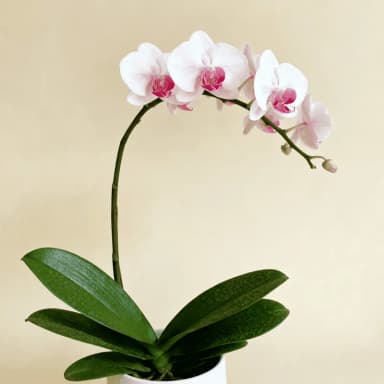
Phalaenopsis amabilis
moderate careWater a phalaenopsis by the color of its roots, not the calendar: silvery-gray means thirsty and plump green means hydrated, and because this orchid grows in bark rather than soil, it rots fast if water is ever left standing in its crown.
Quick care facts
- Watering
- Every 7–10 days by thorough soak in the growing season; every 10–14 days in winter
- Light
- Bright, indirect light; no direct sun, which scorches the leaves — an east-facing window is ideal
- Humidity
- 50–70% preferred; a humidity tray or humidifier helps in dry homes
- Temperature
- 18–27°C (65–80°F) by day; avoid temperatures below 15°C (59°F)
- Soil
- Chunky orchid bark mix — not potting soil — that lets roots dry and breathe between waterings
How to water a Phalaenopsis Orchid
A phalaenopsis grows in loose bark, not soil, so instead of checking soil moisture, look at the roots through the pot: plump and green means well-hydrated, while silvery-gray or white means it's time to water, regardless of how many days it's been.
Water by thorough soak roughly every 7 to 10 days — run lukewarm water through the pot for 15 to 30 seconds or dunk it briefly, then let it drain completely and shake out any excess caught in the bark.
Never let water sit in the crown, where the leaves meet at the plant's center, since standing water there causes crown rot that can kill the plant within days; blot any pooled water dry with a tissue right away.
Growth slows over winter, so stretch the interval to every 10 to 14 days, but keep checking root color rather than relying on the calendar alone — a cool room or lower light can shift the timing either way.
Watering a Phalaenopsis Orchid with LeafyPod
Because orchid bark drains and dries completely differently from potting soil, LeafyPod applies a bark-specific profile that soaks the mix on a longer cycle than it would use for a soil-grown plant, then lets it dry out fully before the next delivery.
The top-down reservoir also waters at the base of the bark rather than over the foliage, which removes the crown-rot risk that comes with hand-watering an orchid from above, and the app widens the interval on its own once winter's slower growth sets in.

LeafyPod Starter Pack
From $145
Common Phalaenopsis Orchid problems
Signs of overwatering
- Roots turning brown, black, or mushy instead of firm and green
- Yellow, mushy leaves at the base near the crown
- A soft, collapsing crown with water visibly pooled at its center
- Moldy or sour-smelling bark
Signs of underwatering
- Roots staying silvery-gray and shriveled for an extended stretch
- Leaves that look thin, wrinkled, or slightly deflated
- Flower buds dropping before they open
- Flowers wilting and fading faster than usual
Frequently asked questions
How often should I water a Phalaenopsis orchid?
Every 7 to 10 days in the growing season and every 10 to 14 days in winter, but let root color be the real guide: water when the roots turn silvery-gray, and hold off while they're still plump and green.
Why are my orchid's roots turning silvery gray?
Silvery-gray roots simply mean the bark has dried out and the plant is ready for water — it's a normal color change, not a sign of damage. After watering, healthy roots turn green again within a day.
Can I water my orchid with ice cubes?
It's better not to. Ice cubes deliver too little water too slowly for bark to soak thoroughly, and the cold can shock tropical roots. A room-temperature soak or thorough pour-through works far better.
Why are my orchid's leaves turning yellow and mushy near the base?
Yellow, mushy leaves at the base usually point to crown rot from water sitting in the center of the plant, or roots that have been kept too wet. Let the bark dry out fully and always blot away any water pooled in the crown.