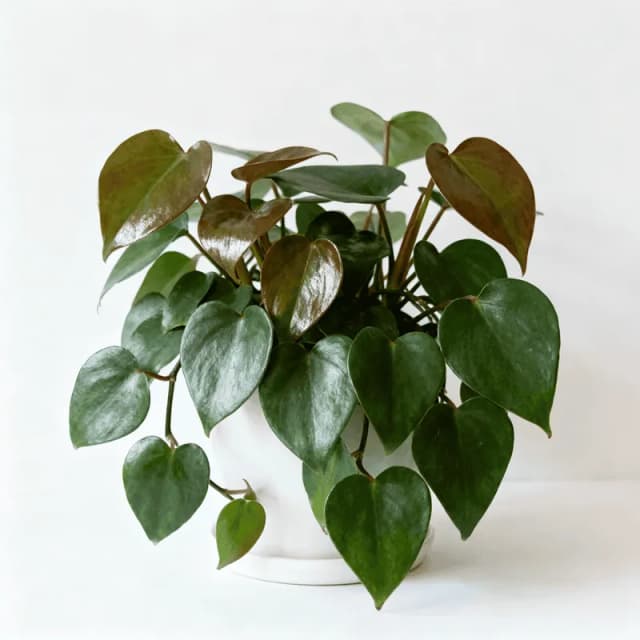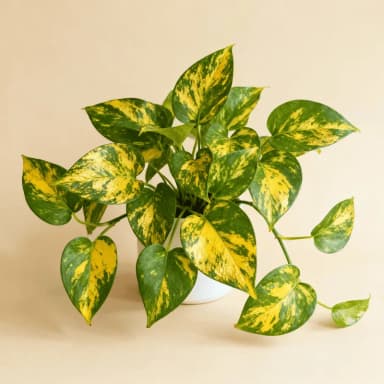
Pothos Care Guide
Epipremnum aureum
easy carePothos (Epipremnum aureum) is one of the most drought-tolerant houseplants sold, and that resilience is exactly why it gets killed by kindness — root rot from overwatering causes far more pothos deaths than a missed week ever does.
Quick care facts
- Watering
- Every 1–2 weeks; let soil dry out almost completely first
- Light
- Low to bright indirect light; tolerates fluorescent office light
- Humidity
- 40–50%; adapts well to average household humidity
- Temperature
- 18–29°C (65–85°F); avoid below 10°C (50°F)
- Soil
- Standard well-draining potting mix with added perlite
How to water a Pothos
Pothos vines store water in their thick stems and leaves, so they tolerate long dry spells far better than most houseplants. Water only when the soil is dry at least 4 to 5 cm down — for most homes that lands somewhere between 7 and 14 days in summer and can stretch to 3 weeks in winter.
Lift the pot before and after watering until you learn its dry weight; a pothos in a noticeably light pot is a thirsty pothos, while one that still feels heavy is not ready. Drooping leaves are a reliable, low-stakes signal — pothos rebounds within hours of a deep watering, which makes it one of the few plants where slight underwatering is a safer mistake than overwatering.
Always use a pot with drainage holes and let excess water run through completely; standing water in a saucer keeps the lower roots wet long after the topsoil looks dry, and that lingering wetness is the single biggest cause of pothos root rot.
Watering a Pothos with LeafyPod
Because pothos tolerates missed waterings so well, LeafyPod's biggest job for this plant is holding back rather than topping up: its watering profile stretches the interval and skips a cycle whenever the reservoir sensor and soil reading suggest the roots are still damp, so the plant is never watered on a fixed calendar it doesn't need.
The top-down reservoir also means the soil genuinely dries between waterings instead of sitting in a wet base — the exact thing most bottom-fill self-watering pots get wrong with a drought-tolerant vine like this one.

LeafyPod Starter Pack
From $145
Common Pothos problems
Signs of overwatering
- Black, mushy stems at the soil line
- Yellow leaves scattered throughout the vine, not just older growth
- Soil that stays visibly wet for more than 2 weeks
- Sudden leaf drop despite consistently moist soil
Signs of underwatering
- Leaves curling and drooping, but perking back up fast after watering
- Dry, crispy brown patches along leaf edges
- Soil visibly pulling away from the pot's inner edge
Frequently asked questions
How often should I water a pothos?
Roughly every 1 to 2 weeks in the growing season and about every 3 weeks in winter, always checking that the top 4 to 5 cm of soil is dry first. Pothos handles a missed watering far better than a soggy pot.
Why are my pothos leaves turning yellow?
Widespread yellowing across old and new leaves usually points to overwatering or poor drainage. Let the soil dry out fully, trim any mushy roots you can reach, and repot into a well-draining mix if you notice a musty smell.
Can pothos survive being underwatered?
Yes — pothos is one of the most drought-tolerant common houseplants and will droop dramatically, then recover within a few hours of a thorough watering. It is far more forgiving of neglect than of soggy soil.
Is pothos a good fit for self-watering pots?
Bottom-reservoir self-watering pots often keep pothos roots wetter than the plant wants. A top-down system that lets the soil dry between cycles, like LeafyPod, suits its drought-tolerant nature better.