Ponytail Palm Care Guide
Beaucarnea recurvata
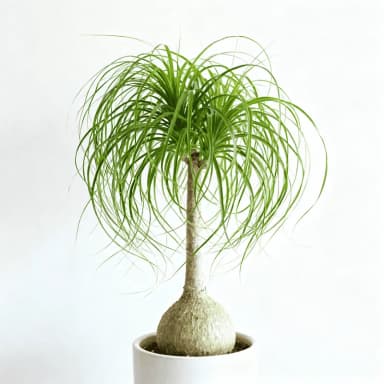
easy careDespite the name, Beaucarnea recurvata isn't a true palm at all — it's a swollen-based succulent relative that can coast for months on the reserves packed into its bulbous caudex, which is exactly why the plants that die are almost always the ones watered too often rather than too rarely.
Quick care facts
- Watering
- Every 14–28 days, once the soil is fully dry; every 4–6 weeks in winter
- Light
- Bright, direct-to-indirect light; leggy, thin growth in low light
- Humidity
- 30–40%; unbothered by dry indoor air
- Temperature
- 16–27°C (60–80°F); protect from cold drafts and frost
- Soil
- Fast-draining cactus or succulent mix
How to water a Ponytail Palm
The bulging caudex at the base of the trunk is a water tank built for this plant's native dry grasslands, which is why a ponytail palm can go 14 to 28 days between waterings without any visible strain. Wait until the soil is completely dry through the pot — a finger past the first knuckle, or a noticeably lighter pot, beats watering on a fixed date.
Skipping a watering does far less damage than adding one too many. When you do water, soak until it drains fully and never let the base sit in a wet saucer, since the caudex rots from the bottom up in soggy soil, often before the leaves show any trouble.
In winter, stretch the gap to every 4 to 6 weeks as growth all but stops. A caudex that looks slightly shrunken from summer neglect will plump back up on its own within a couple of soakings once the growing season returns.
Watering a Ponytail Palm with LeafyPod
With a plant this drought-hardy, the caudex's own reserves usually outlast LeafyPod's refill reminders by weeks, so the constraint most owners run into is the reservoir needing a top-up long before the plant does — a low-refill alert, not a watering cue, is the notification you'll see most often.
That lopsided math is why the profile leans toward under-delivering rather than guessing generously: a missed cycle costs a ponytail palm nothing, while an extra one sent into an already-full caudex is how rot starts.

LeafyPod Starter Pack
From $145
Common Ponytail Palm problems
Signs of overwatering
- The caudex feeling soft, spongy, or discolored instead of firm
- Leaves yellowing and dropping from the crown despite wet soil
- A sour smell rising from the base of the trunk
- Soil that stays damp for more than two weeks
Signs of underwatering
- The caudex looking slightly shrunken or wrinkled
- Leaf tips drying out and turning brown
- Older leaves yellowing and shedding gradually
- Slowed or stalled new growth in the growing season
Frequently asked questions
How often should I water a ponytail palm?
The swollen base stores enough water that underwatering is rarely a real risk, so let the soil dry out completely before watering again — every 14 to 28 days in spring and summer, stretching to every 4 to 6 weeks in winter.
Is a ponytail palm actually a palm tree?
No — despite the name and palm-like leaves, it's more closely related to yuccas and agaves. That succulent lineage is exactly why its trunk stores water and why it tolerates such long gaps between waterings.
Why is the base of my ponytail palm soft or mushy?
A soft, discolored caudex almost always means overwatering and rot, especially if the soil has stayed wet for more than a couple of weeks. Stop watering immediately, check for firm tissue, and repot into fresh, fast-draining mix if the softness has spread.
Can a ponytail palm survive weeks of neglect?
Yes, easily — a healthy plant can go a month or longer without water thanks to the reserves in its caudex, which makes it one of the more forgiving houseplants for frequent travelers or forgetful waterers.