Hoya Care Guide
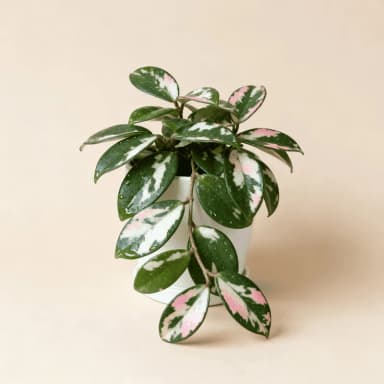
Hoya carnosa
easy careBecause its thick, semi-succulent leaves hold onto water, Hoya carnosa would rather sit dry for an extra week than be watered on a fixed schedule — and snipping off its old, leafless flower stalks is the fastest way to lose next season's blooms.
Quick care facts
- Watering
- Every 10–14 days, letting soil dry out fully between waterings; every 2–4 weeks in winter
- Light
- Bright, indirect light; a little direct morning sun encourages blooming, though it tolerates medium light
- Humidity
- 40–60% preferred; tolerates average household humidity
- Temperature
- 18–27°C (65–80°F); protect from temperatures below 10°C (50°F)
- Soil
- Chunky, well-draining mix (potting soil with perlite and orchid bark)
How to water a Hoya
Let the soil dry out completely before watering again, checking every 10 to 14 days — hoya's thick, semi-succulent leaves store water the way a mild succulent would, so they shrug off a missed watering far better than most trailing vines.
When you do water, soak thoroughly until it runs from the drainage holes and let the pot drain fully; the bigger risk for hoya is root rot from a mix that stays wet, so a chunky, fast-draining blend with plenty of perlite or bark matters as much as the interval.
Slow down further in winter, stretching to every 2 to 4 weeks as growth and water use drop off. Once flowers fade, leave the short, leafless stalk they grew from — called a peduncle — attached to the vine, since hoya reblooms from those same spurs year after year and cutting them off delays or prevents future flowers.
Watering a Hoya with LeafyPod
Hoya's thick, waxy leaves act as their own reservoir, buffering the plant comfortably between drinks — so the real risk usually isn't the plant running dry, it's a well-meaning keeper topping it up early out of habit before that buffer is actually spent.
LeafyPod waits for a genuine full dry-down before the next delivery, then pulls the interval out further once winter growth slows, so the soil isn't sitting wet on a schedule the plant no longer needs — that same stability also protects the old flowering spurs hoya reblooms from, since root rot threatens them, not a vine that skips a week.

LeafyPod Starter Pack
From $145
Common Hoya problems
Signs of overwatering
- Leaves turning yellow and feeling soft or mushy
- Black, mushy roots when the plant is checked
- Leaves dropping even though the soil is still wet
- Musty smell or fungus gnats around the soil
Signs of underwatering
- Leaves wrinkling or puckering as they use up stored water
- Older leaves dropping from the base of the vine
- Slowed growth and little to no new flowering
- Crispy, dry leaf edges
Frequently asked questions
How often should I water a hoya?
Hoya's thick leaves store enough water that it tolerates a late watering far better than a soggy pot — water every 10 to 14 days in the growing season, only once the soil has dried out completely, stretching to every 2 to 4 weeks in winter.
Why is my hoya not blooming?
Hoya usually needs several hours of bright light, including a bit of direct morning sun, to set flower buds, and it often takes a mature vine a couple of years to bloom at all. Insufficient light is the most common cause of a hoya that won't flower.
Should I cut off the flower stalks after a hoya blooms?
No — leave the short, leafless peduncle where the flowers grew. Hoya reblooms from the same spurs in future seasons, and removing them means starting over from scratch on that stem.
Why are my hoya's leaves wrinkled?
Wrinkled or puckered leaves mean the plant has used up its stored water and is ready for a thorough soak. Water deeply and the leaves should plump back up within a few days.