String of Pearls Care Guide
Senecio rowleyanus
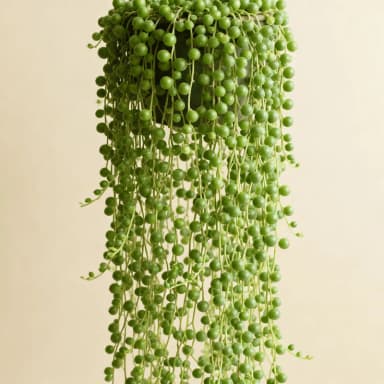
advanced careSenecio rowleyanus stores water in its round, bead-like leaves and telegraphs its own thirst — plump pearls mean it's hydrated, shriveled ones mean it's thirsty — but its trailing stems rot at the crown almost overnight in wet soil, which is what earns this succulent its advanced rating.
Quick care facts
- Watering
- Every 14–21 days, only once the soil has dried out completely; every 3–5 weeks in winter
- Light
- Bright, indirect to direct light; a sunny window keeps the pearls plump and round
- Humidity
- 30–40%; average household humidity is fine
- Temperature
- 18–24°C (65–75°F); protect from frost and temperatures below 10°C (50°F)
- Soil
- Fast-draining cactus or succulent mix in a shallow, wide pot
How to water a String of Pearls
The pearls themselves are the best gauge you have: round and plump means the plant is holding plenty of water, while flattened or wrinkled pearls mean it's genuinely thirsty and ready for a drink. Beyond that visual cue, plan on watering every 14 to 21 days, only once the soil has dried out completely.
Water at the soil level rather than over the trailing pearls, soak until it runs from the drainage holes, and let the pot drain fully — string of pearls rots at the stem and crown remarkably fast in soil that stays wet, so a shallow pot and a gritty mix that dries quickly matter as much as the schedule.
Stretch the interval out further in winter, to roughly every 3 to 5 weeks, since cooler temperatures and lower light slow the plant's water use sharply and winter is when most string of pearls plants are lost to rot.
Watering a String of Pearls with LeafyPod
String of pearls gives an unusually clear visual signal of its water status, but LeafyPod removes the guesswork anyway: the profile waters on a dry-first cycle that matches how plump, hydrated pearls actually behave, rather than reacting after they've already started to shrivel.
Because rot happens so quickly once this plant sits wet, the app leans deliberately toward a late refill over an early one and widens the interval further in winter, when the risk of a soggy crown is highest and the visible margin for error is thinnest.

LeafyPod Starter Pack
From $145
Common String of Pearls problems
Signs of overwatering
- Pearls turning translucent, mushy, and dropping off the strands
- Blackened, soft stems at the soil line or crown
- A musty or rotten smell from the pot
- Strands going limp and falling off the pot's edge in clumps
Signs of underwatering
- Pearls shriveling, wrinkling, and flattening like raisins
- Strands looking thin and sparse with visible gaps between pearls
- Pearls losing their round shape and feeling soft and deflated
Frequently asked questions
How often should I water string of pearls?
Every 14 to 21 days in the growing season, only once the soil has dried out completely, stretching to every 3 to 5 weeks in winter. Let the pearls themselves guide you — plump means wait, shriveled means water.
Why are the pearls on my string of pearls shriveling?
Shriveled, flattened pearls almost always mean the plant is thirsty and has used up its stored water. Give it a thorough soak and the pearls should plump back up within a few days.
Why are the pearls on my string of pearls turning mushy and falling off?
Mushy, translucent pearls that drop easily are a sign of overwatering and likely stem rot. Stop watering, check that the pot drains freely, and let the soil dry out completely before the next watering.
Is string of pearls toxic to cats and dogs?
Yes, Senecio rowleyanus is considered toxic to cats and dogs if chewed or ingested, so it's best kept somewhere pets can't reach the trailing strands.