Pilea Care Guide
Pilea peperomioides
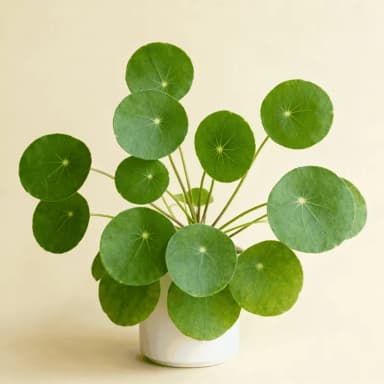
easy carePilea peperomioides earns its 'UFO plant' nickname from round, coin-shaped leaves that sit flat atop thin stems — when the plant gets thirsty, those coins tip downward in unison like a closing umbrella. A weekly quarter-turn keeps new growth flat and even instead of craning toward the window.
Quick care facts
- Watering
- Every 7–10 days, when the top few centimetres of soil are dry
- Light
- Bright, indirect light; rotate the pot regularly since it leans hard toward the light source
- Humidity
- Average household humidity (40–50%) is fine
- Temperature
- 18–24°C (65–75°F); avoid cold drafts
- Soil
- Well-draining potting mix with added perlite
How to water a Pilea
Give the pot a quarter-turn toward the light each week before worrying about the watering can — pilea grows so aggressively toward light that skipping rotation is the single biggest cause of lopsided, cupped leaves on this species.
Check the top few centimetres of soil every 7 to 10 days and water once they've dried out, soaking thoroughly until it runs from the drainage holes and letting the pot finish draining — a well-draining mix with perlite is what keeps roots from sitting wet on this easygoing plant.
If you do miss the window, the coin-shaped leaves tell on you: the whole plant droops, then straightens back to its flat, perky stance within a few hours of a thorough soak — treat that as a backup alarm, not the main way you track watering.
Watering a Pilea with LeafyPod
Pilea's biggest care lapses come from two habits — forgetting to rotate the pot and forgetting to check the soil — and LeafyPod solves only one: it keeps the plant on a scheduled dry-down cycle so the soil rarely swings all the way to a dramatic droop, though the weekly quarter-turn toward the light is still on the grower.
That steadier cycle has a side benefit too: a pilea that isn't repeatedly wilting and recovering tends to put more energy into the pups at its base, the offshoots most owners actually want to propagate rather than into stress recovery.

LeafyPod Starter Pack
From $145
Common Pilea problems
Signs of overwatering
- Yellowing leaves that feel soft rather than crisp
- A mushy, blackened stem at the soil line
- Dark, mushy roots when the plant is checked
- Drooping leaves even though the soil is still wet — a sign of rot, not thirst
Signs of underwatering
- The whole plant drooping dramatically, with leaves hanging down
- Leaves perking back up within hours of a thorough watering
- Crispy, dry leaf edges
- Soil pulling away from the sides of the pot
Frequently asked questions
How often should I water a Pilea peperomioides?
Every 7 to 10 days, once the top few centimetres of soil have dried out. The plant droops noticeably when it's thirsty, which makes it easy to catch before real stress sets in.
Why is my pilea drooping?
Check the soil before assuming: if it's dry, the droop is thirst, and a thorough watering should have the coin-shaped leaves standing back up within hours. If the soil is still wet when the plant droops, root rot is the likelier cause, and more water will only make it worse.
How do I propagate the baby plants (pups) growing from my pilea?
Once a pup has a few of its own leaves, cut it away from the base of the mother plant with a clean knife and root it in water or moist soil. Pilea produces these pups readily, especially on a plant that isn't stressed.
Why is my pilea leaning to one side?
Pilea grows strongly toward its light source, so a plant that isn't rotated will lean and produce lopsided growth. Give the pot a quarter-turn each week to keep the leaves flat and even.